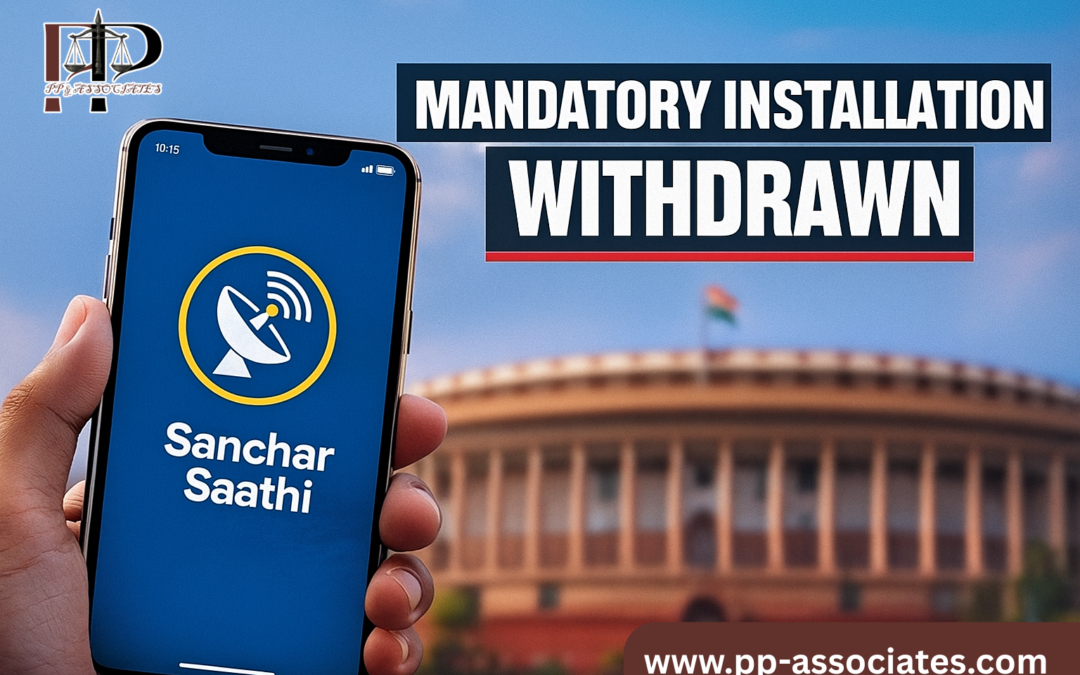
Centre Withdraws Mandatory Sanchar Saathi Pre-Installation Order: What It Means for Smartphone Users
Introduction
In a significant policy reversal, the Government of India has withdrawn its directive that required all smartphone manufacturers to pre-install the Sanchar Saathi mobile application on new devices. The move comes just days after the original order was issued and follows widespread criticism concerning privacy, user consent, and digital surveillance concerns.
This development is particularly important for consumers, legal professionals, and technology companies, as it highlights the ongoing debate between cybersecurity initiatives and individual privacy rights. At PP & Associates, we break down the implications of this policy change and what stakeholders need to know going forward.
What Was the Original Directive?
Late last week, the Department of Telecommunications (DoT) issued instructions mandating:
- Pre-installation of the Sanchar Saathi app on all new mobile phones sold in India.
- Inclusion of the app in devices already manufactured, through mandatory software updates.
- Ensuring the app remains easily visible and accessible during device setup.
- Restrictions prevent manufacturers from disabling the app’s functions.
The stated objective behind the mandate was to enhance user protection against mobile fraud, telecom scams, and the misuse of lost or stolen phones. The app includes features such as IMEI verification, reporting fraudulent connections, and blocking stolen devices.
Why the Order Sparked Controversy
The directive faced immediate pushback from multiple quarters:
1. Privacy Concerns
Digital rights activists and legal experts argued that mandating a government app on every device could infringe upon the constitutional right to privacy.
There were also concerns that such mandates might set a precedent for intrusive digital surveillance.
2. Fear of Misuse
Many users worried that even if the app appeared harmless, a pre-installed version could potentially gain system-level permissions, making it difficult to remove or fully disable.
3. Industry Resistance
Smartphone manufacturers raised compliance issues, with some major companies known for strict privacy rules reportedly objecting to compulsory government applications being bundled with their devices.
4. Public Outcry
Social media discussions quickly amplified concerns about user autonomy, data security, and the government’s intentions.
Government’s Withdrawal of the Mandate
Following the backlash, the Central Government withdrew the order, clarifying that:
- Installation of Sanchar Saathi will remain voluntary.
- Users will have complete freedom to uninstall or ignore the app.
- The rollback was driven by concerns raised by the public and industry stakeholders.
The government also highlighted that the app already has a large user base and continues to be a useful tool against mobile-related fraud.
What This Means for Consumers
✔ No Forced App Installations
New smartphones will no longer come with Sanchar Saathi pre-loaded or pushed through updates.
✔ Complete Control
Users can download the app if they find its features useful—or choose not to.
✔ Reduced Privacy Risks
The withdrawal eases fears of involuntary data collection or hidden surveillance features.
Impact on Smartphone Manufacturers
- OEMs are relieved from additional compliance burdens.
- No need to modify software images or override existing security policies.
- The move prevents potential conflicts between global privacy standards and local mandates.
For manufacturers, this rollback avoids logistical disruptions and potential consumer distrust.
Broader Implications for Digital Governance
This episode represents a crucial lesson in digital policy-making:
- User consent cannot be bypassed, even for security-focused initiatives.
- Transparency and consultation play a vital role in digital governance.
- Public scrutiny remains a powerful tool in shaping technology regulations.
The incident also highlights the fine balance between enhancing cybersecurity and protecting personal freedoms.
Key Takeaways
- Sanchar Saathi is optional, and users may install or remove it freely.
- Mandatory government apps on smartphones remain a sensitive privacy issue.
- Policy rollbacks show the importance of public participation in digital policy decisions.
- The government may still introduce future guidelines under the Telecom Cyber Security Rules, so ongoing vigilance is essential.
Conclusion
The government’s decision to withdraw the mandatory pre-installation of the Sanchar Saathi app is a positive step for privacy, consumer autonomy, and transparent governance. At the same time, the app itself may offer genuine benefits in combating telecom fraud, but imposing it by default raises legitimate concerns.
At PP & Associates, we advocate for user-centric digital policies that uphold constitutional rights while addressing the challenges of an increasingly connected world. We will continue to monitor developments in telecom regulations, cybersecurity frameworks, and privacy standards in India.
If you require legal insights or compliance support regarding telecom rules or data privacy matters, feel free to connect with us.